



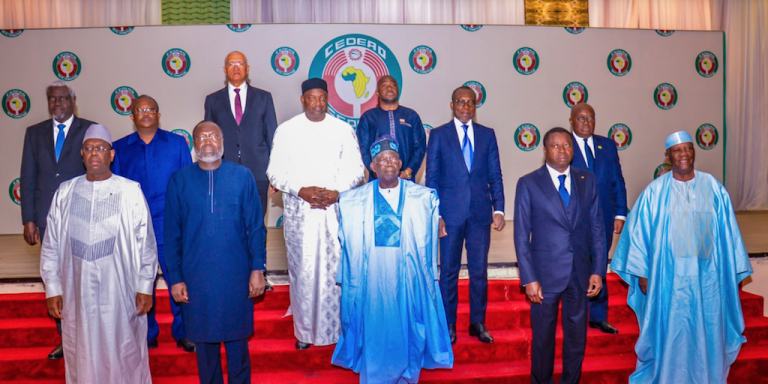
The Economic Community of West African States (ECOWAS) should review the sanctions it imposed on Niger following the coup last July, to mitigate the adverse impacts on citizens, the International Crisis Group (ICG) has urged.
In a report titled “ECOWAS, Nigeria and the Niger Coup Sanctions: Time to Recalibrate” published on its website on December 5, the group says the sanctions are hurting civilians in Niger and Nigeria, and should be reviewed to target the generals that disrupted democracy.
Noting that ECOWAS’s initial reaction to the coup was “understandable”, as it was informed “by legitimate concerns about the risks of coup contagion in West Africa”, the ICG says it “sent a strong signal of disapproval concerning coups and have undoubtedly created external pressure on Niger’s generals”.
Crisis Group, however, observes that ECOWAS and Nigeria – its most influential member and current chair – “appear to have overshot the mark” as the sanctions “have created severe hardship in Niger with adverse boomerang effects on Nigeria”.
For Niger, ICG says the suspension of official trade with member states, particularly Nigeria and Benin Republic, has created scarcities, fuelled inflation and worsened chronic food insecurity, in a country that was already facing its second-highest level of food insecurity since 2014, even before the coup.
The global conflict prevention and peacebuilding organization is equally worried that the cut of electricity supply from Nigeria – which was providing over two thirds of Niger’s need – is further damaging the landlocked country’s brittle economy.
For Nigeria, Crisis Group notes that the border closure is “crippling a vibrant cross-border economy” along the over 1,600 km-long Nigeria–Niger border, officially estimated at over 238 million US dollars in 2021.
“It is also disrupting livelihoods in border communities and exacerbating humanitarian challenges in the northernmost states, where many residents are still grappling with attacks by terrorist and bandit groups. Such disruptions could render unemployed youth more vulnerable to recruitment by diverse armed groups,” ICG warns.
The report further observes that the border closure is also jeopardising two major infrastructure projects that were designed to boost the economies of Nigeria and Niger.
These are the 284km Nigeria-Niger Railway line and the 4,100km Trans-Saharan Gas Pipeline, through which Nigeria plans to supply up to 30 billion cubic metres of natural gas to Europe yearly. Both projects are now “at risk of delay or worse”, the report warns.