



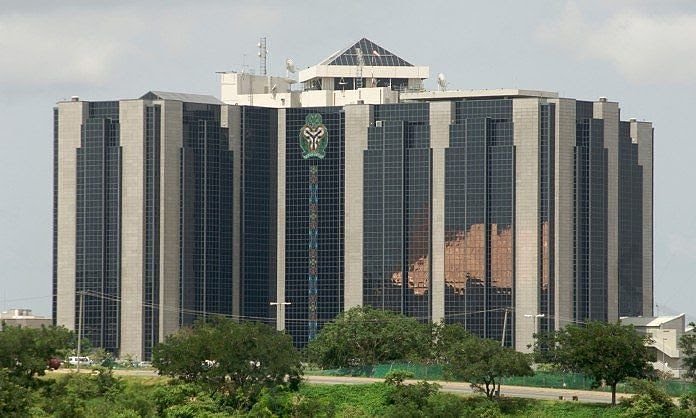
For deputy governors of the Central Bank of Nigeria (CBN), including the Acting Governor, Folashodun Shonubi, as well as the majority of the directors, the odds against them keep increasing by the day as the confidence crisis reaches a watershed moment this week.
While the nominees for replacement of the embattled suspended governor, Godwin Emefiele, and his four deputies, will face the crucial and statutory Senate screening, the old guards will be further grilled at the Department of State Security (DSS), from where the team of investigators operates, to determine their extent of connivance in the financial abuse estimated at several trillions of naira, The Guardian has been informed.
The investigative team, multiple sources have revealed, has subjected all the deputy governors and the majority of the directors to lifestyle audits to determine the extent to which they have enriched themselves in the course of their assignments.
While the audit is not proof of their culpability in the alleged frauds, a source said it has, alongside documented evidence, served as an important tool in determining where to focus attention for quick wins.
From early August till date, almost all the deputy governors and several directors have honoured invitations to the DSS facility multiple times.
The Guardian was informed that the Acting Governor has been interrogated four times in recent weeks, a reason President Bola Tinubu resolved to replace the entire leadership team.
The President was said to have been advised that “incessant invitations of regulators for a probe have negative consequences for confidence building”, hence last week’s nomination of Olayemi Micheal Cardoso to replace Emefiele.
For the positions of deputy governors, the President also nominated Emem Nnana Usoro, Muhammad Sani Abdullahi Dattijo, Philip Ikeazor and Dr Bala Bello.
The nominees are said to have been briefed on the urgent need to stabilise the financial system with a clear mandate to fix the foreign exchange crisis and inflation rate to achieve price stability.
This week, the President is expected to conclude a plan to ease the deputy governors, whose tenures are still running, out of the Central Bank to make way for a new era in the financial system, which he described as “rotten” during an engagement with Nigerians in the diaspora in Paris, France.
But findings suggest the deputy governors, who have been fully briefed on the executive’s direction, are putting the finishing touches to their plans to tender their resignations.
A source knowledgeable about the matter said resignation is considered their best option but that it was not clear if the President would not prefer outright sack, which would not require legislative approval.
According to the CBN Act, the President needs a two-third majority of the Senate to sack the CBN governor. The provision of the law is meant to shield the chief regulator against undue external interference and secure the autonomy of the office.
The Governor can also be removed if he “is guilty of serious misconduct about his duties under this Act; disqualified or suspended from practising his profession in Nigeria by order of a competent authority made in respect of him personally; becomes bankrupt.
The CBN governor can be removed by the President, provided that the removal of the governor shall be supported by a two-thirds majority of the Senate praying that he be removed,” the CBN Act states.
The embattled four deputy governors under Emefiele are Folashodun Adebisi Shonubi (who has been in charge of the apex bank on an interim basis since June), Aishah Ahmad (in charge of the Financial System Stability Directorate) Edward Adamu (Corporate Services Directorate) and Kingsley Obiora (Economic Policy Directorate).
The tenures of Ahmad and Adamu were renewed by ex-President Muhammadu Buhari for another five years each last year while Obiora’s first tenure extends to 2025.
At CBN, the fate and plan of the deputies, as they are often referred to is hush-hush. Speculations, which could not be independently verified by The Guardian, said some of the deputy governors, who have been grumbling that they are unfairly being punished for the perceived sins of Emefiele, plan to tender their resignations this week.
But the coming tsunami may not stop with the deputies. The Guardian had reported that some directors were already struggling to wriggle out of heavyweight conspiracy with the suspended governor.
Sources said the affected directors could take the option of voluntary retirement to save their careers and names if they are not arrested for prosecution immediately.
Last week, a retired Director of Finance of the bank, Benjamin Fakunle, was reportedly arrested at a retirement party organised in his honour by his colleagues for the role he played in doctoring the financials of the bank from 2016 to 2022.
The Obazee-led Special Investigation panel also interrogated three officials of the Financial Reporting Council (FRC) who were accused of compromising their positions in the audit of the bank under Emefiele.
The officials reportedly collected N401.7 million to tweak the accounting guidelines used by the CBN to prepare the financials.
Discrepancies and irregularities were said to have been discovered in the audited accounts, which came on the heels of the interrogation of the Executive Secretary of the Financial Reporting Council of Nigeria (FRC), Shuaib Ahmed, and his deputy, Iheanyi Anyahara, last week.
The fraudulent guidelines, about six in all, according to reports, were issued and sold to the CBN by the late former executive secretary of FRC, Daniel Asapokhai; his deputy, Anyahara and Ahmed, the current executive secretary at a total cost of N401.75 million.
The current FRC Act is the brainwork of Obazee as chief executive of the defunct Nigerian Accounting Standards Board (NASB), the legacy institution of FRC.
Yesterday, a source, who disclosed that some directors maintained lifestyles that are at variance with the legal earnings, said more would be quizzed in the coming days as the investigators streamline the investigators.