

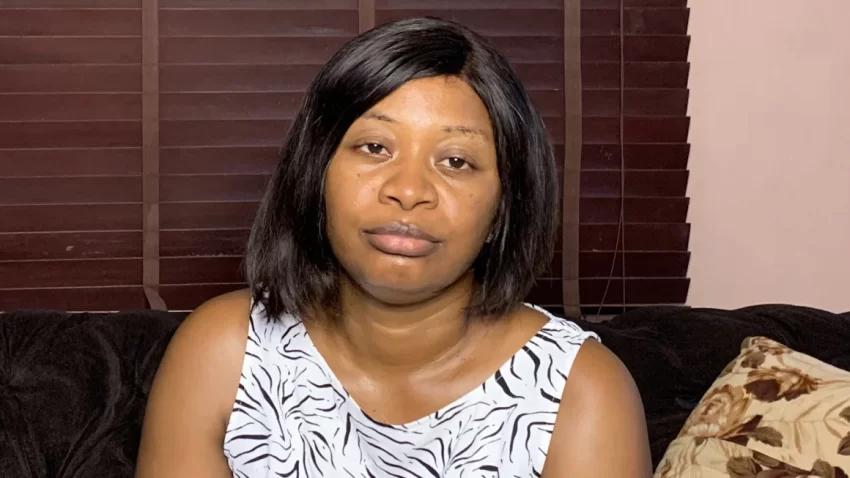
A Nigerian woman who wrote an online review of a can of tomato puree is facing imprisonment after its manufacturer accused her of making a “malicious allegation” that damaged its business.
Chioma Okoli, a 39-year-old entrepreneur from Lagos, is being prosecuted and sued in civil court for allegedly breaching the country’s cybercrime laws, in a case that has gripped the West African nation and sparked protests by locals who believe she is being persecuted for exercising her right to free speech.
What did she say?
Okoli, a small-scale importer of children’s wear, told CNN that on September 17 she asked her 18,000 followers on Facebook to share their opinions about a tomato puree she bought in place of her usual brands, saying she found it too sweet.
Her post, accompanied by a photo of an opened can of Nagiko Tomato Mix, produced by local company Erisco Foods Limited, sparked varied reactions from commenters, one of whom replied: “Stop spoiling my brother’s product. If (you) don’t like it, use another one than bring it to social media or call the customer service.”
Okoli responded: “Help me advise your brother to stop ki***ing people with his product, yesterday was my first time of using and it’s pure sugar.”
A week later, on September 24, she was arrested.
In legal filings seen by CNN, the Nigeria Police Force alleged that Okoli used her Facebook account “with the intention of instigating people against Erisco Foods,” adding in a statement on March 7 that it had “unearthed compelling evidence” against her from its preliminary investigations.
According to the police, Okoli was charged with “instigating Erisco Foods Limited, knowing the said information to be false under Section 24 (1) (B) of Nigeria’s Cyber Crime Prohibition Act.”
If found guilty, she could face up to three years in jail or a fine of 7 million naira (around $5,000), or both.
Okoli was separately charged with conspiring with two other individuals “with the intention of instigating people against Erisco Foods Limited,” which the charge sheet noted was punishable under Section 27(1)(B) of the same act. She risks a seven-year sentence if convicted of this charge.
CNN has reached out to Facebook for comment.
Okoli is also being sued in a separate civil case brought by Erisco, which said in a statement issued on January 19 that it was defending its reputation after her comments “resulted in several suppliers deciding to disassociate themselves from us.”
The Lagos-based food company said it also “suffered the loss of multiple credit lines” and had therefore filed a civil lawsuit against Okoli that sought 5 billion naira (more than $3 million) in damages. This case is due to be heard on May 20, her lawyer, Inibehe Effiong, told CNN.
A spokesman for Erisco Foods, Nnamdi Nwokolo, told CNN the company would not speak further on the case “because it is pending in a court of competent jurisdiction.”
Public apology required
Okoli, who’s currently pregnant with her fourth child, told CNN she was arrested by plainclothes police while she was in church in Lagos and detained in a leaky police cell.
“I was put in the cell around 6 p.m. (on September 24). There were no seats, so I stood all through till the next day. My legs were inside the water (that came in from the leaking roof). Sometimes, I squatted to reduce the pressure on my legs. I was thinking about my children who were at home. I was talking to myself. I would think, I would pray, I was messed up,” she said.
The following day, Okoli was flown to the Nigerian capital, Abuja, and held at a police station until her release on administrative bail was finalized a day later, she said.
Agreeing to apologize publicly to Erisco was a condition of her release on bail, she said, but her lawyer, Effiong, told CNN she agreed to this under duress and therefore did not apologize after her release.
The police filed their case against Okoli in an Abuja court on October 5.
The first court hearing took place on December 7. She was represented by her lawyer but did not attend in person.
Okoli told CNN that a month later, on January 9, police entered her Lagos home and attempted to arrest her, despite a restraining order issued by a court on November 8 barring her arrest without a court order. CNN has seen a copy of the restraining order.
“They stayed in my building from 6:30 a.m. until 5:30 p.m. My children couldn’t go to school that day and we couldn’t go out to get food because the cooking gas was finished,” she said. Eventually, she said, the police left.
National police spokesman Olumuyiwa Adejobi told CNN he could not comment on the case as the matter was in court.
“We will comment on the case when the court decides,” Adejobi said.