



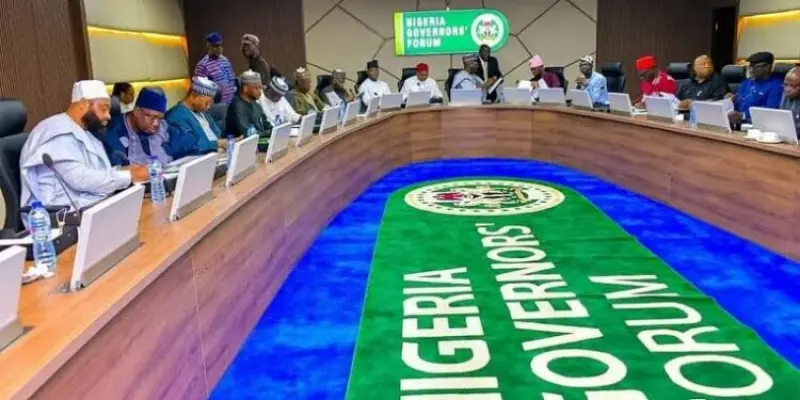
State Police appears to be on the way to becoming a reality after President Bola Tinubu and state governors agreed to work on the modalities to establish it.
But the clearest indication yet that the quest may translate into reality is a ‘Bill for an Act to Alter the Provisions of the Constitution of the Federal Republic of Nigeria to Provide for the Establishment of State Police, and Related Matters’ currently in the works in the House of Representatives.
Meanwhile, the Bill is stoking controversy even as insecurity across the country continues to worsen.
No fewer than 500 people including schoolchildren were abducted in Borno, Kaduna and Sokoto states over the past three weeks but some of them have been freed and reunited with their families.
Only last week, Governor Dauda Lawal of Zamfara State lamented that his state was under siege and solicited President Bola Tinubu’s assistance.
Lawal spoke during a visit to the Presidential Villa in Abuja.
Whereas the Bill gives sweeping powers to the President to direct the Inspector General of the Federal Police in enforcing security, in what amounts to a bombshell, governors won’t have such sweeping powers over State Police if the Bill passes the Senate hurdle and becomes law after the President’s assent.
The Bill provides that the Commissioner of Police of a state, notwithstanding that he is the appointee of the state governor, may refuse to carry out the governor’s order if he deems the order to be unlawful.
In such circumstances, however, the Bill provides for intervention by the State Police Service Commission whose position shall be final.
The decision of the President and governors in favour of State Police was in response to the increasing wave of insecurity in Nigeria occasioned by the activities of kidnappers, bandits and terrorists.
Promoters of State Police believe that putting the police under governors’ control in their respective states would give them the leeway to stem insecurity.
Anarchy
But critics say that may be the road to anarchy as partisan governors could turn the police under their control into a political machine and use them against their opponents.
There is, however, a counter position: A partisan President too under the current dispensation can politically deploy the police and use them against his opponents; so if that is the case, analysts argue, there is nothing wrong in having State Police so long as insecurity is gone.