


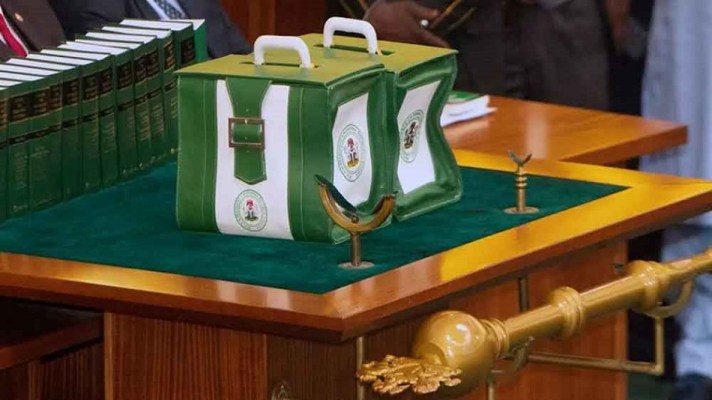
A budget is an aggregate policy instrument used to organize and articulate government aims and objectives, which are frequently defined in terms of programs and projects and are usually supported by a financial plan.
It is a tool for achieving predetermined goals and establishing checks and balances on both vertical and horizontal accountability.
A budget typically covers one year and explains how a government intends to mobilise and allocate the projected resources that will accrue to it during that time period.
The National Assembly has played an important role in Nigeria’s budget process since the country’s return to democratic governance in May 1999. In most societies, the government organizes annual activities and programs that it expects to complete in accordance with its priorities.
By implication, a poorly implemented budget over time can lead to economic stagnation, poverty, and unemployment.
President Bola Tinubu, on January 1, 2023, signed the N28.7 trillion 2024 budget into law.
Analysis from Budget Proposal
The Federal Government of Nigeria recently presented the 2024 budget proposal to the National Assembly. The budget titled “Budget of Renewed Hope” shows a proposed expenditure of NGN28.7 trillion and an estimated revenue of NGN18.32 trillion for the 2024 fiscal year.
Revenue projection surged by 65.8% to N18.32 trillion, surpassing the 2023 revised budget of N11.05 trillion.
Expenditure projection rose by 10.3% to N28.7 trillion from the 2023 revised budget. It breaks down as capital expenditure (31.6%), recurrent (36.1%), and debt servicing (30.0%).
Debt service projection improves to 45.0% of revenue in 2024 from 73.5% in the 2023 budget proposal.
The projection for capital expenditure improved by 34.7%, while nondebt recurrent expenditure increased by 19.1%.
The total deficit hit N9.18 trillion, about 3.88% of the GDP, marking a shift towards better fiscal management.
The proposed budget is believed to align with the renewed hope agenda, fiscal strategies and priorities with broader national development objectives.
Capital expenditure is the fund used to build, maintain, acquire or upgrade capital assets like buildings, machinery or facilities.
On the whole, a successfully planned and prudently managed budget is vital to the attainment of the government’s objective of improving the socio-economic wellbeing of its citizens. The success or failure of a budget depends largely on whether it impacts negatively or positively on the welfare of majority of the people.
Budget Circle implementation
On the Budget Circle, it is usually the President who decides the broad budget strategies on the basis of the administration’s policies and a view of the microeconomic environment. He provides the Budget Office with a plan of action for implementing the strategy while he comes up with a more detailed version of the plan.
The budget process is carried out within the budget cycle, which is a complete set of events occurring in the same sequence every year and culminating in the approved budget. The cycle allows the system to absorb and respond to new information and, therefore, allows the government to be held accountable for its actions. Although the existing budgetary system may be less than perfect in guaranteeing adherence to this principle of responsibility, periodicity contributes to achieving and maintaining a purposeful government.
In every country, the government has a responsibility to care for the security and welfare of its citizens. Such responsibilities include the provision of infrastructure and amenities such as roads, electricity, bridges, transportation, schools, water, housing, hospitals, peace and order, as well as creation of jobs and social security, amongst others. The annual budget is the vehicle provided by law for the acquisition, allocation and distribution of national resources for socio-economic development of the nation.
A new minimum wage for workers
President Bola Tinubu, in his New Year speech, promised to implement a new minimum wage for workers.
“The economic aspirations and the material well-being of the poor, the most vulnerable, and the working people shall not be neglected. It is in this spirit that we are going to implement a new national living wage for our industrious workers this new year. It is not only good economics to do this; it is also a morally and politically correct thing to do” he said.