


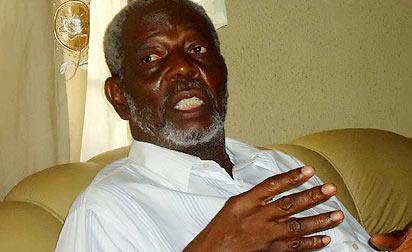
The ‘Grandfather of Nutrition in Nigeria’, Professor Babatunde Oguntona, is widely acknowledged for his contributions to the fortunes of nutrition in the country.
Although he retired 10 years ago from the Federal University of Agriculture, Abeokuta (FUNAAB), formerly University of Agriculture, Abeokuta, Oguntona, who clocked 80 recently, is far from tired.
A nutritionist by profession, Oguntona was a founding member of the Faculty of Agriculture at the University of Maiduguri, and the first professor appointed by FUNAAB, where he was a founding member of the institution’s Nutrition programme.
In this interview with James Ogunnaike, Oguntona calls for creation of a Ministry of Food and Nutrition, as part of measures to tackle the hydra-headed problem of malnutrition and nutrient deficiencies in Nigeria. He speaks about other salient issues on nutrition.
Excerpts:
Retirement life To discuss life after retirement, you must consider it from two perspectives: intellectual and social.
From an academic standpoint, it does not appear like I have retired in the early part of my retirement since I was involved in so many activities that required my time, and I was enjoying it much more than while I was still in service.
It came to the point where I believed I should have retired sooner since possibilities were coming from everywhere, but as time passed, I understood that things couldn’t keep going at that rate and that I needed to slow down. Now I’m thankful to God that I have been able to successfully slow down. Now,
I have more time for myself, my family and my passion as a nutritionist.
Routine on daily basis
My everyday routine after retirement is fairly simple. My sleeping habits tend to shift slightly, and in my case, substantially.
I used to get up about 6 a.m. while I was in the military, but now that I’m retired, I get up at 7 a.m. I perform some workouts when I wake up. I stroll about the Estate two to three times every week. I go to community gatherings. I have a tiny garden and do most of my gardening in the evening. I don’t skip meals. I’ll have a nap after lunch. What it’s like to be 80 I don’t feel any different now that I’m 80
than I did when I was 70. When I turned 70, it dawned on me that I was getting old.
I don’t see any change now that I’m 80. It’s just another birthday, another
milestone. I’m not feeling anything unusual, either emotionally or physically.
I felt elderly when I was 70. There are no more mountains to climb or conquer.
When it comes to accomplishments, thereare several activities in which I am happy to be a team member. I was in the University of Maiduguri in Borno State before coming to the University of Agriculture (now Federal University of
Agriculture, Abeokuta). I was surrounded by really friendly individuals at the
University of Maiduguri, and my family and I truly liked our stay there.
I am especially proud of the fact that I was also a founding member of the Nutrition programme at the University of Agriculture, Abeokuta, now FUNAAB, because we faced many challenges and obstacles in the beginning. Nobody thought there should be a Nutrition department since some thought it should be Home Economics or Cooking.
We had to face the storm. But we were fortunate to have an understanding Vice-Chancellor in the figure of Professor Nimbe Adedipe, who bought into the concept and enabled the nutrition programme to be established. It is now the most popular programme at FUNAAB.
According to the information I have, the University cannot admit all applicants who apply for the programme, this is to demonstrate the popularity.