


The price of sachet water has surged across Nigeria recently, raising concern and forcing Nigerians to explore alternatives with significant health implications, writes DANIEL ADAJI
Over the years, Nigerians have become known for their ability to endure pain and adapt to extreme adversity.
This innate ability seems to be playing out once more; this time concerning the soaring prices of sachet water, a common source of drinking water, which does not seem to be very ‘common’ these days.
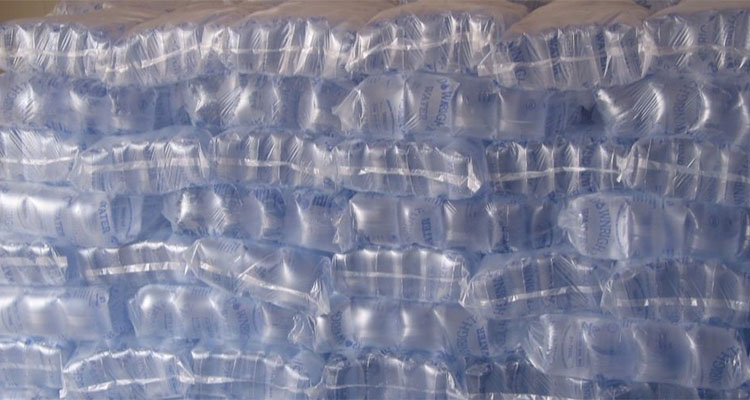
Sachet water, commonly referred to as ‘pure water’ has witnessed significant price spikes in recent months, a development that has forced Nigerians to resort to alternatives that health experts believe pose significant health risks.
Historically, sachet water was introduced to the Nigerian markets around 1990 but its regulation by the National Agency for Food and Drug Administration and Control started in 2001.
The sachet water price which was N5 in the early 2000s rose through N10, N20, N30 and now N50 per sachet.
Bottled water, which was formerly N50, currently sells for N200 per bottle.
Citizens lament
A resident of Lokoja in Kogi State, Marvelous Sanni, told our correspondent that a bag of sachet water containing 20 sachets, which was sold for N200 per bag, sells for N400 at the wholesale and N500 at retail stores currently.
She added that due to the hike in price, many families, including hers, had resorted to consuming water from boreholes within the neighbourhood.
He lamented that wells around the areas had dried and people were left with no option but to purchase the borehole water for their domestic use.
According to Sanni, those who still consume sachet water within her environment consider it a luxury because of the premium they pay to purchase the water.
“Sachet water is now very expensive. A bag sells between N400 and N500 and a sachet is sold at N50. Because of this increase, we have resorted to consuming borehole water here.
“I am not sure of how clean the water tanks are; nobody has been reported to have fallen sick as a result of taking the water. Those who still consume sachet water here are seen as big boys.
“Wells would have been a cheaper alternative to getting water for cooking while we purchase borehole water for drinking, but the wells are dry already. A bowl of 50 litres of water from the borehole cost N50, which is still cheaper than the sachet water,” she said.
A mother of five and resident in Abuja, Margret Danjuma, remarked that her family previously consumed a minimum of one and a half bags of water daily but could no longer afford to purchase those bags.
She added she had to resort to buying water from the nearest borehole stand and package the water in empty water cans for the family to consume.
“The country is hard now; the price of pure water has gone up and I cannot afford the one and a half bags we consume daily. So, I fetch water from the borehole around and package them in battles with iceblock. That is our new survival strategy now,” she declared.
No more water for customers
Some local restaurants observed around Bwari Area Council of the Federal Capital Territory have stopped serving water to their customers. Those who serve, give customers water purchased from water vendors.
When our correspondent visited a restaurant at Bwari, the food seller was observed serving water to a customer in a black nylon bag. The excited customer said, “At least, this is better than buying sachet water for N50.”
While experts have pointed out that borehole water, if heated, is safer to consume than sachet water, however, many Nigerians do not have the patience to process their water.
A food nutritionist, Olorunfunmi Sayo, said, “I consider boiled water from boreholes safer than sachet water. The challenge is that many Nigerians may not have the patience to process their water because of other economic demands.”
She added that an average individual needs about 2.6 litres of water per day which is about 5 sachets of water.
By implication, a household of five would need at least 25 sachets of water in a day for normal consumption, which will cost N750.
Going by the current minimum wage of N30,000, an average household of five earning such an amount would spend N22,500 on sachet water alone.
While experts have suggested boiling water as an alternative, many Nigerians still depend on pipe-borne water for their daily consumption because of the time taken to boil and refrigerate the water.
According to Michael Olufemi, while he considers boiling water as a cheaper alternative, as a field worker, he still depends on the expensive sachet water to hydrate himself while working.
“I know boiled water is good but it takes time. I work in the field. So, how do I start boiling and cooling water before continuing my work? So, I am pleading with the producers and government to come to our aid,” he said.
On May 29, 2023, President Bola Tinubu ended the subsidy regime and floated the country’s currency thereafter.